7 Canned Food Swaps That Quietly Cut Your Grocery Bill in Half
Quick Answer: Swapping 7 specific fresh items for their canned equivalents - beans, tomatoes, corn, pumpkin, tuna, mushrooms, and coconut milk - can cut those ingredient costs by 40-70% while keeping nearly identical nutrition, since canning locks in nutrients at peak ripeness.
Fresh produce looks like the responsible choice at the store, but half of it ends up wilted in the crisper drawer by Thursday. These 7 canned swaps deliver the same meals for a fraction of the cost, with almost none of the waste.

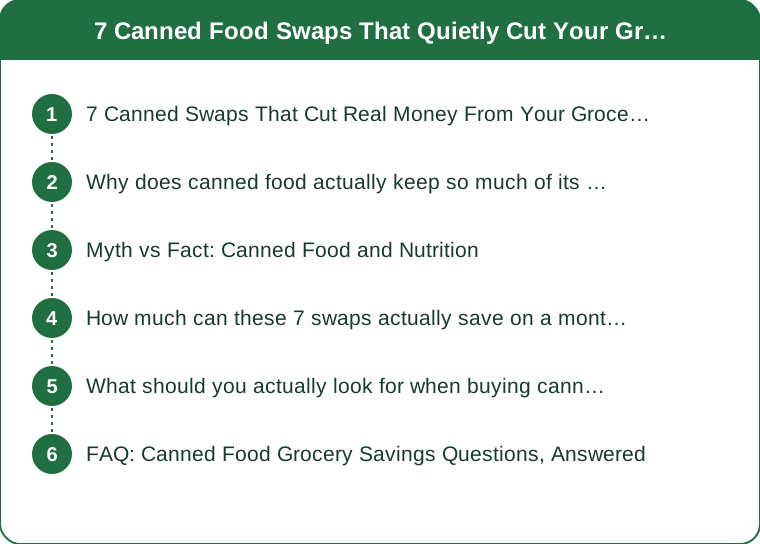
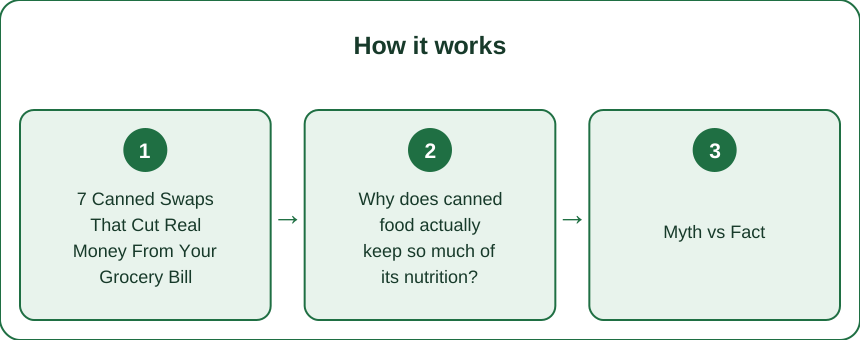
7 Canned Swaps That Cut Real Money From Your Grocery Bill
1. Canned beans instead of dried, and instead of fresh proteins
A can of beans runs about $1-1.50 and needs zero prep, compared to buying and cooking dried beans (cheaper per pound but requires soaking time most people skip) or swapping in meat, which costs 3-4x more per serving of protein. Rinsing canned beans cuts sodium by roughly 40%.
2. Canned tomatoes instead of fresh, out of season
Fresh tomatoes in winter are often flavorless and priced at a premium for quality that isn’t there. A $1.50 can of diced tomatoes delivers more flavor for sauces, soups, and chili than a $4 pack of pale winter tomatoes, with a shelf life measured in years instead of days.
3. Canned corn instead of fresh cobs
Fresh corn is genuinely great in peak summer, but the rest of the year it’s pricier and less sweet. Canned corn costs about a third as much and works in nearly every recipe that calls for kernels - soups, salads, skillet dinners.
4. Canned pumpkin instead of a whole pumpkin
A whole pie pumpkin requires roasting, scooping, and pureeing - an hour of work for a result that a $2 can matches almost exactly in flavor and texture for baking or oatmeal mix-ins.
5. Canned tuna instead of fresh fish
Fresh fish is one of the priciest proteins per pound at most grocery stores. Canned tuna delivers comparable protein and omega-3s at roughly a quarter of the price, with a shelf life that eliminates the “use it tonight or lose it” pressure fresh fish creates.
6. Canned mushrooms instead of fresh, for cooked dishes
Fresh mushrooms spoil within days and shrink significantly when cooked. For any dish where mushrooms are cooked into a sauce or filling rather than served raw, canned mushrooms cost less and won’t go slimy in the fridge before you get to them.
7. Canned coconut milk instead of fresh coconut or cartons
Cracking and processing a fresh coconut is a project few people actually do at home, and shelf-stable coconut milk cartons cost more per ounce than the canned version. A $2 can covers a curry or a batch of rice with money left over compared to either alternative.
Why does canned food actually keep so much of its nutrition?
Produce destined for canning is typically picked and processed at peak ripeness, often within hours, which locks in vitamin and mineral content at its highest natural point. Fresh produce sitting in transit and on shelves for days or weeks can actually lose more nutrients through that delay than canned produce loses through processing.
The main nutrient canning does reduce somewhat is vitamin C, which is heat-sensitive - but for items like beans, corn, and tomatoes where vitamin C isn’t the primary nutritional draw, this tradeoff barely registers. Protein, fiber, and most minerals hold up well through the canning process.
Myth vs Fact: Canned Food and Nutrition
Myth: Canned food is always loaded with sodium. Fact: Sodium varies widely by product and brand, and rinsing canned beans or vegetables under water for 30 seconds cuts sodium content by roughly 40% on average - a simple habit that closes most of the gap with fresh.
Myth: Fresh produce is always more nutritious than canned. Fact: For several vegetables, canned versions test comparable or even higher in certain nutrients than fresh produce that’s traveled and sat on shelves for days before purchase.
Myth: Canned food is only for emergency pantry stockpiling, not regular meals. Fact: Canned beans, tomatoes, and corn are everyday cooking staples in kitchens worldwide, not just a backup option - treating them as a legitimate primary ingredient, not a downgrade, is where the real savings show up.

How much can these 7 swaps actually save on a monthly grocery bill?
For a household that regularly buys fresh versions of these 7 items, switching to canned typically saves $15-40 per month, depending on how often each ingredient shows up in your meals. Beans and tomatoes tend to deliver the biggest single-item savings since fresh versions of both carry a notable price premium relative to their canned counterparts.
The waste-reduction savings often matter as much as the sticker price difference - canned goods don’t spoil on a deadline, so you’re not throwing out unused fresh produce at the end of the week, which independent studies on household food waste suggest accounts for a meaningful chunk of the average grocery budget.
What should you actually look for when buying canned goods?
Check for “no salt added” or “low sodium” versions first - they typically cost about the same as the regular version and let you control seasoning yourself. For tomatoes specifically, whole peeled or diced in juice (not seasoned sauce blends) gives you the most flexibility and usually the lowest price per ounce.
Store-brand canned goods are almost always made in the same facilities as name-brand versions for these staple items, so the store brand is frequently the smartest buy with no meaningful quality tradeoff. A quick dent-and-bulge check before purchase (avoid cans with either) is a simple food-safety habit worth keeping regardless of brand.
FAQ: Canned Food Grocery Savings Questions, Answered
Is canned food safe to eat past the printed date?
Canned goods are typically safe well past their “best by” date as long as the can isn’t dented, bulging, or leaking - the date reflects peak quality, not a safety cutoff, though flavor can decline over several years.
Do canned vegetables need to be cooked before eating?
Most canned vegetables are already fully cooked during processing and safe to eat straight from the can, though heating usually improves flavor and texture.
Which canned swap saves the most money for a typical household?
Canned beans usually deliver the single biggest savings versus fresh protein alternatives, both in dollar terms and in how often beans show up across different meals throughout the week.
TL;DR:
- Beans, tomatoes, corn, pumpkin, tuna, mushrooms, and coconut milk save 40-70% versus fresh in most recipes
- Canned produce often keeps comparable or better nutrition than fresh that’s traveled and sat for days
- Rinsing canned beans and vegetables cuts sodium by about 40%
- Store-brand canned goods usually match name brands for these staples at a lower price
Swap even 2-3 of these into your regular rotation and the savings show up on your next receipt without changing what’s actually on your plate.
Keep Reading
This article is for general informational purposes only and is not medical advice. Always consult a qualified health professional for guidance specific to you.