7 Freezer Strategies That Cut the Autumn Grocery Bill
Quick Answer: The seven strategies that save the most are: freeze in portions you will actually use, label everything with contents and date, buy protein on reduction and freeze it the same day, freeze the ingredients that spoil fastest rather than the ones that keep, batch-cook the base rather than the finished meal, keep a running list on the freezer door, and run a use-it-up week every month or two. Together these address the two ways a freezer loses money: food going in and never coming out, and food not going in at all.
Your freezer is either your cheapest food storage or an expensive box of things you are afraid to identify. The difference is about seven habits.

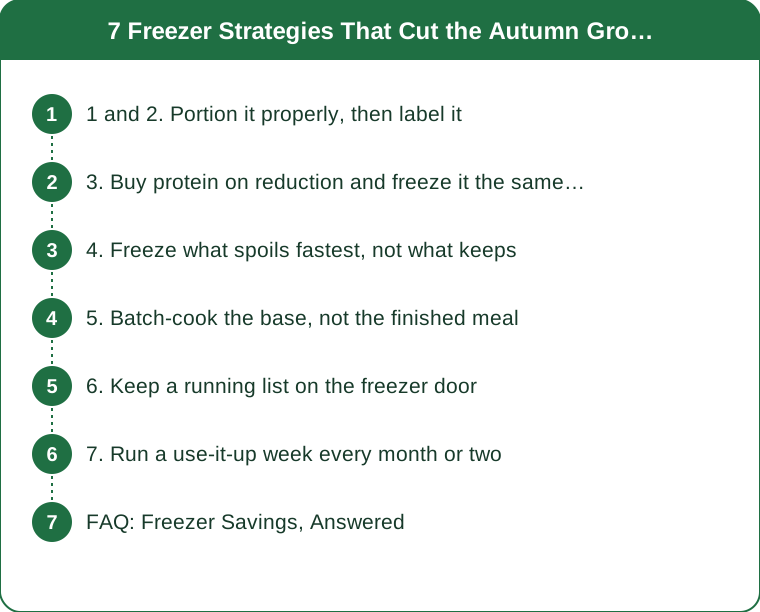
1 and 2. Portion it properly, then label it
1. Freeze in the portions you will actually use
A block of four servings gets used when you need four servings, which is rarely. A kilo of mince frozen whole has to be fully defrosted and cooked at once, so it waits for the right occasion and often never gets one.
Freeze flat and freeze small. Portions in freezer bags pressed flat stack efficiently and defrost far faster, which matters when the decision is being made at six o’clock on a weeknight.
Single portions are the ones that get eaten. They cover lunches, they cover the evening nobody wants to cook, and they need no planning.
2. Label everything - contents and date
Unlabelled food does not get eaten. This is the single most common freezer failure, and it costs more than any shopping decision.
Contents plus date on masking tape takes four seconds. Frozen food is safe indefinitely at proper freezer temperature, but quality declines over time, so the date tells you what to prioritize rather than what to discard.
Write it before it goes in, not after. The intention to label later has never once survived contact with a hot kitchen.
3. Buy protein on reduction and freeze it the same day
Reduced meat and fish near their use-by date is the largest single saving in most grocery bills. It is the same product at a substantial discount, and the freezer removes the time pressure entirely.
Freeze on the day of purchase, in portions. Food should be frozen before the use-by date and handled properly - and once frozen, the clock effectively stops.
Know your shop’s reduction time. Every supermarket has one, it is usually consistent, and staff will tell you if you ask.
4. Freeze what spoils fastest, not what keeps
Herbs, bread, milk, cheese, ginger, chillies, and citrus zest all freeze well and all get wasted routinely. These are the items that go off before you use them.
Herbs in oil in an ice cube tray is the classic version. It preserves something that otherwise wilts within days and drops straight into a pan.
Bread is the highest-value item here for most households. Freeze it sliced, toast from frozen, and the waste disappears entirely.

5. Batch-cook the base, not the finished meal
A frozen base - tomato sauce, cooked lentils, caramelized onions, stock, a plain mince - becomes four different meals. A frozen finished lasagne is one meal you have to want.
Bases defrost faster and are more forgiving. They also avoid the freezer-fatigue problem of eating the same finished dish five times.
This is also what makes autumn batch-cooking worth doing. As the evenings get darker and cooking motivation drops, a freezer of bases is what keeps weeknight meals from becoming a takeaway decision.
6. Keep a running list on the freezer door
You cannot plan meals around food you have forgotten you own. A list on the door, updated when things go in and come out, converts the freezer from a mystery into an inventory.
Paper and a pen beats an app. The friction of opening a phone is exactly enough to stop it happening.
Cross items off as you use them. The list is only worth keeping if it is accurate, and an inaccurate one is worse than none.
7. Run a use-it-up week every month or two
Shop only for fresh items and build meals from the freezer and the cupboard. Most households can cover most of a week this way, and it typically saves a substantial share of one week’s shop.
It also surfaces what you overbuy. Whatever is still there after a use-it-up week is what you consistently buy and do not eat, which is genuinely useful information.
Autumn is the natural time for it. Schedules are resetting, the summer pattern of eating out is ending, and the freezer usually has an accumulated backlog from months of good intentions.
And it makes room for the next round. A freezer at capacity cannot absorb a reduction-aisle bargain, which is the strategy that saves the most - so keeping space free is itself a money-saving habit.
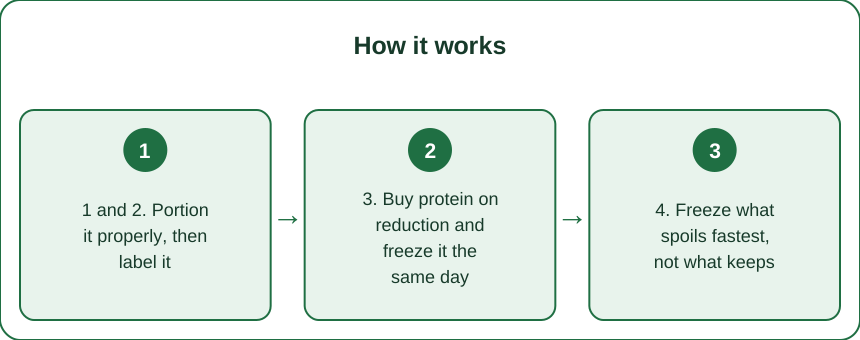
FAQ: Freezer Savings, Answered
How long can you keep food in the freezer?
Food stays safe indefinitely at a proper freezer temperature, but quality declines over time, so the date on the label tells you what to use first rather than what to throw away. Most cooked dishes are best within a few months.
Can you freeze food on its use-by date?
Yes - freeze it before the use-by date passes and follow proper handling. That is what makes reduced-price protein such an effective saving, since the time pressure disappears the moment it is frozen.
What foods freeze better than people expect?
Bread, milk, hard cheese, herbs in oil, ginger, chillies, citrus zest, and cooked pulses. These are also the items most commonly wasted, which is what makes them worth freezing.
How do I stop forgetting what is in my freezer?
Label everything with contents and date, and keep a running paper list on the door that you update in both directions. Then run a use-it-up week every month or two to clear the backlog.
TL;DR:
- Freeze flat, freeze small, and freeze in the portions you will actually reach for on a weeknight.
- Label with contents and date before it goes in - unlabelled food does not get eaten.
- Buy reduced protein and freeze it the same day; that is the single biggest saving available.
- Freeze what spoils fastest - bread, herbs, milk, cheese, ginger - not what already keeps.
- Batch-cook bases rather than finished meals, keep a paper list on the door, and run a use-it-up week every month or two.
Autumn is when the freezer earns its keep. Clear the backlog now and leave room for the bargains.
Keep Reading
This article is for general informational purposes only and is not medical advice. Always consult a qualified health professional for guidance specific to you.