8 Grocery Shopping Strategies That Actually Cut Your Bill (Not Just Feel Frugal)
Quick Answer: The highest-impact grocery savings come from price-per-unit comparisons, batch cooking with intentional overlap, and shopping a strict list built from what’s already in your pantry — not from coupons or vague sale-chasing, which save far less than most budget advice claims.
Most grocery budgeting tips repeat the same few surface-level ideas — clip coupons, buy generic, shop sales — that barely dent a real bill. These eight actually target the mechanics of where grocery spending quietly balloons.

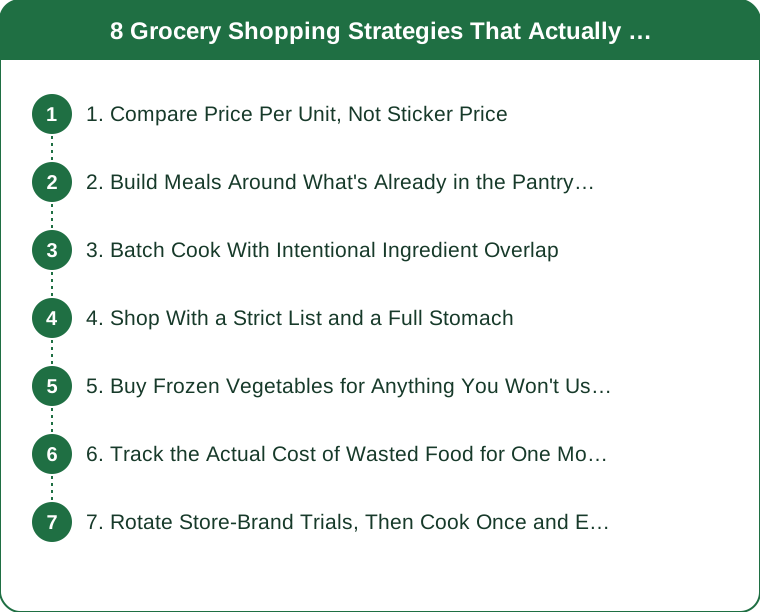
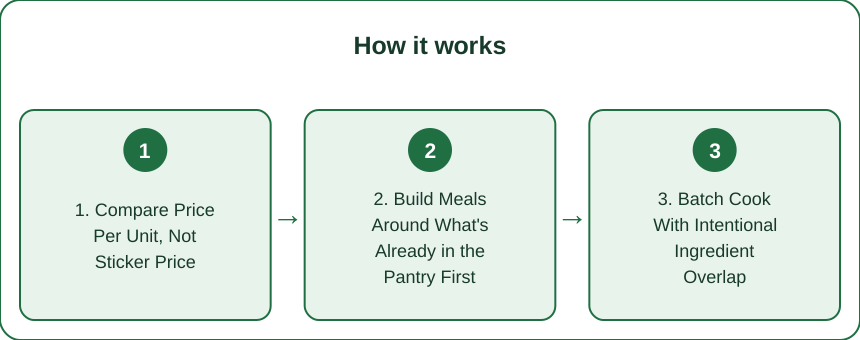
1. Compare Price Per Unit, Not Sticker Price
The larger package or the “on sale” item isn’t automatically cheaper per ounce or per serving — unit pricing, usually printed in small text on the shelf tag, is the only reliable way to compare true cost between package sizes and brands. Getting in the habit of checking it, even briefly, catches a surprising number of false savings.
2. Build Meals Around What’s Already in the Pantry First
Planning a week’s meals from scratch every time leads to buying overlapping partial ingredients that never quite get used up. Starting each week’s plan by checking what’s already open in the fridge and pantry reduces both waste and the total new items needed.
3. Batch Cook With Intentional Ingredient Overlap
Choosing 2-3 recipes for the week that share core ingredients — the same protein, a shared vegetable, a shared grain — means buying in fewer, larger quantities rather than many small amounts across unrelated recipes, which tends to be more expensive per unit.

4. Shop With a Strict List and a Full Stomach
Grocery shopping on an empty stomach is a well-documented driver of impulse purchases, and shopping without a list specifically increases spending on items that weren’t part of the actual meal plan for the week.
5. Buy Frozen Vegetables for Anything You Won’t Use Within Days
Frozen vegetables are frozen at peak ripeness and often cost less per serving than fresh, with none of the spoilage risk — reserving fresh produce purchases for what you’ll actually cook within 2-3 days meaningfully cuts food waste.
6. Track the Actual Cost of Wasted Food for One Month
Most households underestimate how much money is thrown out with spoiled or forgotten food. A simple one-month tally of what gets tossed reveals real patterns — usually a specific category, like fresh herbs or bagged salad — worth adjusting purchasing habits around.
7. Rotate Store-Brand Trials, Then Cook Once and Eat Three Times
Rotate store-brand trials instead of full switching
Rather than switching everything to store brand at once, trial one category at a time — pantry staples first, since taste differences matter less there than in items like coffee or cheese where brand differences are more noticeable.
Cook once, eat three times
Deliberately cooking larger batches of a base component (a grain, a roasted vegetable, a protein) that gets repurposed across three different meals through the week cuts both cooking time and the per-meal grocery cost compared to planning three entirely separate recipes.
TL;DR:
- Unit pricing beats sticker price and sale tags for real cost comparison
- Plan meals around pantry items first, not a fresh recipe every week
- Batch cooking with shared ingredients cuts cost more than shopping smaller and more often
- Frozen vegetables reduce waste without much of a nutrition or taste tradeoff
- Tracking wasted food for a month reveals exactly where your budget is actually leaking
None of these eight require extreme couponing or giving up food you enjoy — they just target where grocery bills actually balloon, which usually isn’t where budgeting advice tells you to look.
Keep Reading
This article is for general informational purposes only and is not medical advice. Always consult a qualified health professional for guidance specific to you.