The Cheapest Protein in the Store, Ranked by What a Serving Actually Costs
Quick Answer: Ranked by the cost of a 25-gram protein serving, the winners are stubbornly unglamorous: dried lentils and beans, eggs, canned tuna, chicken thighs and whole birds, milk, cottage cheese, tofu, and - surprisingly - store-brand protein powder, which competes near the top. Peanut butter and most snack-format proteins look cheap and lose badly once you do the math. Build the week on two or three winners with rotating flavor systems, and protein quietly stops being the expensive macro.
The grocery flier prices packages; your body prices protein. Between those two numbers is where most food budgets leak - because the eye compares the 1.50 can with the 9-dollar tray and calls the can cheap, without asking what a serving of the thing you are actually shopping for costs in each.

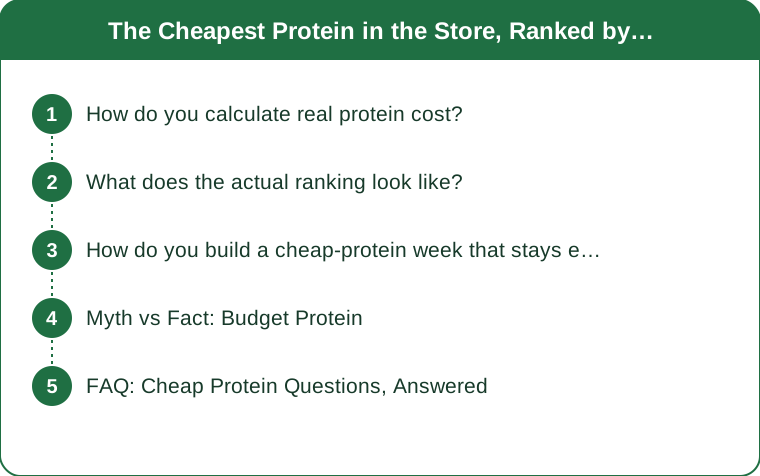
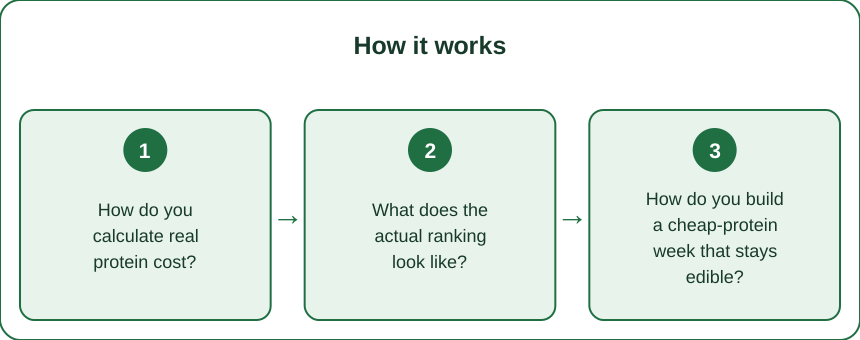
How do you calculate real protein cost?
One division, once per staple: price divided by the number of 25-gram protein servings in the package. Twenty-five grams is a sensible meal-anchor serving - roughly what a palm of meat, a cup of Greek yogurt approaches, or a generous scoop of powder delivers.
Worked example: a dozen large eggs at around 3.50 carries roughly 72 grams of protein - call it three 25-gram servings - so about 1.15 to 1.20 per serving. A pound of dried red lentils near 1.80 holds about 110 grams of protein: four-plus servings, well under 50 cents each. The 6-dollar jar of peanut butter looks competitive until the math runs: 25 grams of protein costs three-plus tablespoons short of 600 calories - a calorie bill that makes it a flavor, not a protein plan.
Three accounting rules keep the math honest. Count cooked yield, not raw promise - bone-in cuts lose weight to bones and shrink, which is priced into the rankings below. Count the calories that ride along - protein wrapped in 500 extra calories is expensive in a different currency. And count your own waste rate: the cheap thing you let expire costs more than the moderate thing you finish. A staple only earns its ranking if it actually gets eaten.
What does the actual ranking look like?
Approximate US store-brand prices per 25-gram protein serving - your store will vary, the order mostly will not:
Under about 75 cents - the champions tier. Dried lentils and beans (often 40 to 60 cents, plus fiber the rest of the list barely offers). Store-brand protein powder by the large tub - routinely 70 cents to a dollar per scoop-serving, the ranking’s most persistent surprise. Milk, at roughly three cups per serving, hovers near the line and brings calcium along.
Roughly 75 cents to 1.25 - the workhorses. Eggs, even at post-inflation prices. Canned tuna and the pantry-fish aisle. Chicken thighs and drumsticks bought in family packs, or the whole rotisserie bird whose carcass owes you soup. Canned chickpeas and black beans when the dried-bean pot feels like too much project.
Roughly 1.25 to 2.00 - still good, buy on features. Cottage cheese and store-brand Greek yogurt - convenience, calcium, and breakfast-readiness justify the step up. Firm tofu, frequently cheaper at international groceries. Frozen fish fillets, ground turkey and the leaner ground beefs on sale.
Above 2.00 - flavor budget, not protein budget. Chicken breast at full price, steak, salmon, deli meat, cheese as a main, jerky, and essentially every protein bar and ready-to-drink shake - the bar format often runs 2.50-plus per serving, which is powder with marketing.
The pattern across the whole list: preparation is the discount. Every step the factory skips - drying, bones, blocks, tubs - is money handed to whoever does the step at home.

How do you build a cheap-protein week that stays edible?
The failure mode of budget protein is not cost - it is week three, when the fourth identical chicken-and-rice bowl loses to a delivery app. The fix is separating the protein decision from the flavor decision.
Anchor on two or three winners per week, cooked in neutral batches: a pot of lentils or beans, a tray of chicken thighs, the egg carton standing by. Neutral is the keyword - salt, maybe garlic, nothing that locks a batch into one cuisine.
Then rotate flavor systems over the same anchors. The identical lentils become curry with a spoon of paste and coconut milk on Monday, taco filling with cumin and salsa on Wednesday, a lemon-herb salad base on Friday. Chicken thighs take barbecue, soy-ginger, and yogurt-spice marinades interchangeably. Sauces are the cheapest ingredient category in the store relative to the boredom they prevent - a shelf of paste jars, spice blends, and vinegars is what makes the champions tier livable.
Let the formats share shifts: powder disappears into morning oats and smoothies, eggs cover the fastest meals, beans stretch the meat dishes - a half-pound of ground beef plus a can of black beans feeds four chili bowls with better numbers than a pound of beef alone.
And late summer is the produce assist: August tomatoes, zucchini, corn, and peppers are at their annual price floor, which means the vegetables surrounding the cheap protein are briefly cheap too. A frittata in tomato season is a fully optimized meal.
Myth vs Fact: Budget Protein
Myth: Cheap protein means low quality protein. Fact: Eggs, milk, and canned fish are among the most complete, bioavailable proteins measurable at any price - the champions tier is cheap because of processing and marketing absence, not nutritional absence.
Myth: Frozen and canned are nutritional downgrades. Fact: Freezing preserves protein fully, and canned fish keeps its protein and adds convenience; sodium is the only line worth reading. The freezer case is the budget’s best friend, not its compromise.
Myth: Protein powder is a ripoff supplement. Fact: Per gram of protein, large-tub store-brand powder beats most meat at the counter. It is dried milk protein in a scoop - judge it as food math, not as a pharmacy purchase.
Myth: Plant protein does not really count. Fact: Totals and variety are what matter over a day - lentils, beans, tofu, and grains together cover the amino acid spread fine, at champions-tier prices, with fiber as a bonus the meat aisle cannot match.
Myth: Eating enough protein cheaply takes hours of cooking. Fact: Eggs take six minutes, canned beans take zero, powder takes a shake. The champions tier includes some of the fastest food in the store - the pot-of-lentils image is one option, not the membership fee.
FAQ: Cheap Protein Questions, Answered
What is the cheapest protein source overall?
Dried lentils and beans, at commonly 40 to 60 cents per 25-gram protein serving - with store-brand protein powder, milk, and eggs close behind. Prices vary by store and week; the tier order rarely does.
Is protein powder cheaper than meat?
Per gram of protein, large-container store-brand powder usually beats chicken breast and always beats steak and bars. It complements meals rather than replacing them, but as pure protein economics it sits near the top.
How do I eat enough protein on a tight grocery budget?
Anchor the week on two or three champions-tier staples, batch them neutral, and rotate cheap flavor systems - curry paste, taco spice, lemon-herb - so repetition never triggers the delivery app. Beans stretching meat dishes is the single highest-leverage move.
Are protein bars ever worth it on a budget?
As protein, rarely - most run 2.50 or more per serving, several times the powder they resemble. As an occasional glovebox emergency against a drive-through, a defensible convenience fee. Buying them as groceries is where the budget leaks.
TL;DR:
- Price the serving, not the package: cost per 25 grams of protein reorders the whole store.
- Champions: lentils and beans, store-brand powder, milk, eggs, canned tuna, chicken thighs - preparation is the discount.
- Peanut butter, bars, and deli formats look cheap and lose on protein-per-dollar or calorie-per-serving.
- Beat week-three boredom by batching neutral anchors and rotating sauce systems; let beans stretch the meat.
Protein is only the expensive macro when it is bought pre-shaped and marketed. Run the one division, stock the champions tier, spend the savings on sauces - and the grocery bill drops while the protein target quietly gets easier to hit.
Keep Reading
This article is for general informational purposes only and is not medical advice. Always consult a qualified health professional for guidance specific to you.