7 Foods That Look Cheap But Are Secretly Draining Your Grocery Budget
Quick Answer: Several foods marketed or perceived as budget staples — pre-cut produce, flavored oatmeal packets, single-serve snack cups, bottled smoothies, veggie chips, granola bars, and bagged salad kits — actually cost significantly more per serving than their whole-food equivalents, once you break down the real price per unit rather than the sticker price.
You reach for these seven items thinking they’re saving you money and time. Priced per actual serving, most of them are quietly some of the worst value in the store.
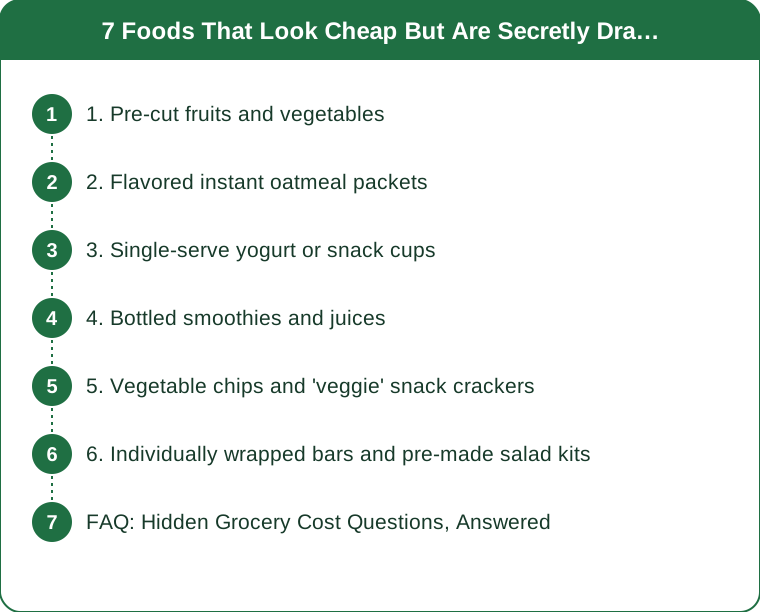
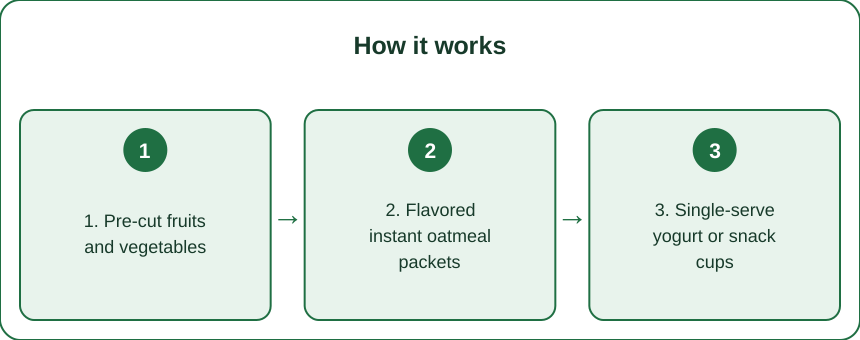
1. Pre-cut fruits and vegetables
The convenience premium on pre-cut produce commonly runs 2-3 times the cost of buying whole and cutting it yourself. Ten extra minutes with a knife is one of the highest-leverage budget swaps in the entire store.
2. Flavored instant oatmeal packets
Individually flavored packets often cost several times more per serving than plain rolled oats bought in bulk, and most of the ‘flavor’ is just added sugar you can control yourself with cheap staples like cinnamon or fruit.
3. Single-serve yogurt or snack cups
Portioned single-serve containers carry a real packaging premium — buying a large container and portioning it yourself into reusable containers typically costs noticeably less per serving for the identical product.
4. Bottled smoothies and juices
Pre-made bottled smoothies are one of the highest markup categories in the store relative to raw ingredient cost — a homemade version with frozen fruit and a blender runs a fraction of the price for a similar or better nutritional profile.
5. Vegetable chips and ‘veggie’ snack crackers
These are often priced at a premium for the ‘veggie’ branding while containing a relatively small percentage of actual vegetable content — plain vegetables with a simple dip cost less and deliver more of what the branding implies.
6. Individually wrapped bars and pre-made salad kits
Bar-format snacks carry both a packaging and convenience premium — a batch of homemade energy bites or simple trail mix portioned at home costs meaningfully less per serving over time. Salad kits follow the same pattern: they bundle convenience into the price in a way that often costs more than buying the same components (greens, toppings, dressing) separately, especially if you’re already buying some of those components for other meals.
FAQ: Hidden Grocery Cost Questions, Answered
Are these foods always a bad value, with no exceptions?
Not always — genuinely tight time constraints can make the convenience worth the premium occasionally. The point is knowing it’s a premium, not assuming these are budget staples by default.
How do I actually calculate price per serving to compare?
Divide total price by number of servings (or by weight/volume for a consistent unit) — many store price tags already show a per-unit price if you look closely at the shelf label.
Which swap saves the most money over time?
Pre-cut produce and bottled smoothies tend to carry the largest convenience markups of the group, making them the highest-leverage swaps to start with.
TL;DR:
- Pre-cut produce, flavored oatmeal, single-serve cups, bottled smoothies, veggie chips, bars, and salad kits all carry real convenience premiums
- Compare price per serving, not sticker price, to see the true cost
- Whole-food, self-portioned equivalents usually cost meaningfully less
- Occasional convenience purchases are fine — the goal is knowing which items are a premium, not defaulting to them as ‘budget’ staples
A few simple swaps from this list can free up real grocery budget without changing what you’re actually eating.
Keep Reading
This article is for general informational purposes only and is not medical advice. Always consult a qualified health professional for guidance specific to you.