In Defense of Frozen Vegetables: Cheaper, Fresher, Zero Guilt
Quick Answer: Frozen vegetables are picked at peak ripeness and frozen within hours, so they often match or beat fresh produce that’s spent a week in transit and another in your fridge. They cost less, they don’t rot, and the sogginess problem is a technique issue — roast them from frozen in a hot pan or a 425°F oven, don’t thaw, don’t crowd.
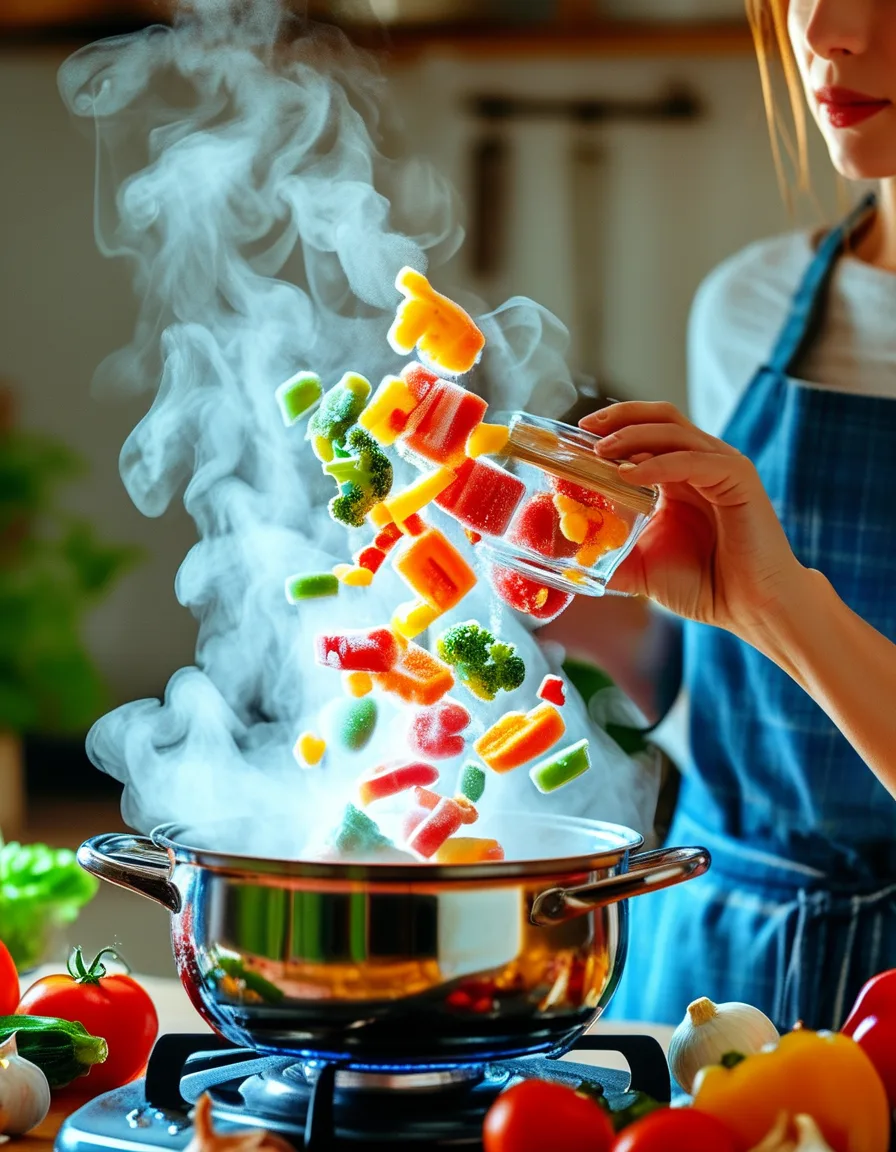
Somewhere along the way frozen vegetables got branded as fresh produce’s sad understudy. Meanwhile they’re picked riper, frozen within hours, and cost roughly half as much.
And the fresh spinach you bought with genuinely good intentions on Sunday? It’s currently liquefying in the crisper drawer, quietly judging you.
Time for the rehabilitation.
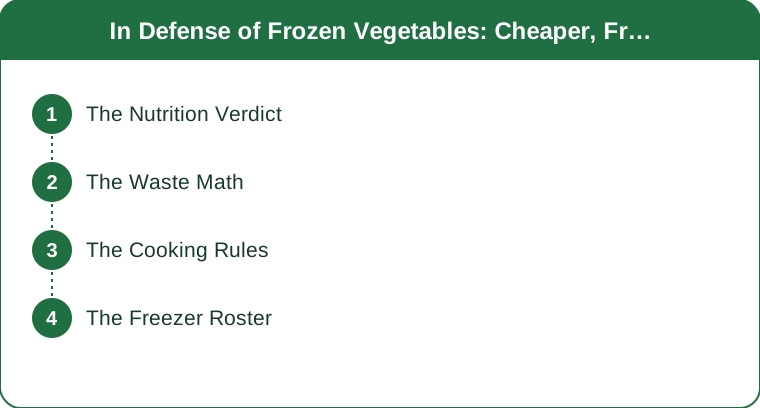
Are frozen vegetables as nutritious as fresh?
In many cases, yes — and sometimes better.
Here’s the mechanism. Vegetables start losing water-soluble vitamins (vitamin C especially, and some B vitamins) from the moment they’re picked. Fresh produce is typically harvested slightly under-ripe so it survives shipping, then spends several days in transit and distribution, then several more in your fridge. That clock runs the whole time.
Frozen vegetables are picked at peak ripeness, blanched briefly, and frozen within hours. Freezing effectively pauses the clock. The blanching step costs a little vitamin C up front, but from there the nutrient content stays remarkably stable for months.
Net result: frozen-at-peak often comes out ahead of fresh-after-ten-days. Nutrition researchers stopped arguing about this a while ago — mostly it’s the produce aisle’s marketing that never got the memo.
The honest nuance: genuinely fresh, local, in-season produce eaten within a day or two of picking still wins. Farmers’ market tomatoes in August beat frozen. Supermarket tomatoes in February don’t.
How much money do frozen vegetables actually save?
Two ways, and the second is bigger than the first.
Sticker price. Frozen vegetables typically run 30 to 50% less per serving than the fresh equivalent, and they’re immune to seasonal price spikes. Frozen peas cost the same in January as in June.
Waste. This is the real saving. Households throw away a substantial share of the fresh produce they buy — the crisper drawer is where good intentions go to become compost. Frozen pours out exactly the amount you need and the rest waits patiently, indefinitely.
If you buy fresh spinach weekly and use half of it, you’re paying double the shelf price for what you actually eat. Frozen eliminates that math entirely. Zero rot, zero guilt, zero Sunday-evening crisper archaeology.
How do you cook frozen vegetables without them going soggy?
The sogginess problem is technique, not destiny. Frozen vegetables carry ice crystals, and ice crystals melt into water, and water steams things. So the entire job is getting that water off fast.
Four rules:
- Don’t thaw. Cook from frozen, always. Thawing lets the cell walls collapse into a puddle before the heat ever arrives.
- Use high heat. A 425°F (220°C) oven, or a genuinely hot pan. Medium heat means the water evaporates slowly and everything sits in it.
- Don’t crowd the pan. Single layer, space between pieces. Crowding traps steam — this is the mistake that ruins most attempts.
- Roast or sear rather than boil. Frozen broccoli roasted at 425°F for 20 to 25 minutes with oil and salt comes out with the same crispy, browned edges as fresh. Boiled frozen broccoli comes out as boiled frozen broccoli.
Steam-in-bag is for genuine emergencies. It works, it’s fast, and it produces exactly the texture that gave frozen vegetables their reputation.
Bonus tip: a hot, dry pan for 2 minutes to drive off surface ice before adding oil gives you noticeably better browning in a stir-fry.
Myth vs Fact
Myth: Frozen vegetables are full of preservatives. Fact: Plain frozen vegetables contain vegetables. The freezing is the preservation. Check the ingredient list — if it says more than the vegetable, you’ve picked up a sauced version.
Myth: Frozen vegetables are lower quality produce. Fact: They’re often higher quality at the point of picking, because they don’t need to survive shipping. Nothing has to be picked under-ripe or bred for durability.
Myth: You can’t use frozen vegetables in real cooking. Fact: Frozen peas, spinach, corn and edamame outperform fresh in most cooked applications. Professional kitchens use frozen peas routinely and always have.
Myth: Frozen vegetables lose everything in the freezer over time. Fact: Quality holds well for 8 to 12 months in a proper freezer. Freezer burn affects texture and flavor rather than safety, and it’s mostly a packaging-seal issue.
Myth: Frozen is only for emergencies. Fact: A stocked freezer drawer is the single most reliable way to make sure vegetables actually appear at dinner on a Wednesday when nobody wants to cook.
What should always be in your freezer?
A workable core roster:
- Spinach — smoothies, eggs, pasta sauce, curries. Squeeze the water out first for anything that isn’t a sauce.
- Broccoli or cauliflower — roasts beautifully, bulks out anything.
- Stir-fry mix — a complete vegetable side in four minutes.
- Peas — genuinely better than fresh for most uses, and they thaw in the time it takes to plate.
- Edamame — protein plus vegetable, and a snack that requires no cooking skill at all.
- Berries — smoothies, oatmeal, and baking without the two-day fresh-berry countdown.
That’s roughly one drawer. It’s a vegetable insurance policy that costs about the same as one restaurant side dish and lasts most of a year.
FAQ
Should I salt frozen vegetables before or after roasting?
Toss with oil and salt before roasting. Salt draws out a little surface moisture that then evaporates in the hot oven, which actually helps browning rather than hurting it.
Are frozen vegetables good for meal prep?
Excellent, and better than fresh for anything you’re reheating. Fresh vegetables prepped on Sunday are noticeably tired by Thursday; frozen ones are cooked on the day and taste it.
Is canned as good as frozen?
Generally not for texture, and canned vegetables often carry added sodium. Canned tomatoes and beans are the clear exceptions — both are genuinely excellent pantry staples.
TL;DR:
- Picked riper, frozen within hours — often nutritionally equal or better than week-old fresh.
- Saves 30 to 50% on price, and much more once you count crisper-drawer waste.
- Don’t thaw. High heat. Don’t crowd. Roast, don’t boil. 425°F for 20 to 25 minutes.
- Keep spinach, broccoli, stir-fry mix, peas, edamame and berries on hand.
- Fresh in-season and local still wins. Supermarket produce in February does not.
Keep Reading
This article is for general informational purposes only and is not medical advice. Always consult a qualified health professional for guidance specific to you.