5 Grocery Habits That Are Quietly Doubling Your Weekly Bill
Quick Answer: Grocery bills usually inflate through small, repeated habits — shopping hungry, buying in the wrong unit size, and skipping a list — rather than one big splurge. Fixing the top 2-3 habits below typically cuts a weekly bill by 15-25% within a month.
You didn’t buy anything extravagant this week. No steak, no specialty cheese — just the normal list. And yet the total at checkout keeps creeping up. That’s rarely one bad purchase; it’s almost always a pattern hiding across a dozen small ones.

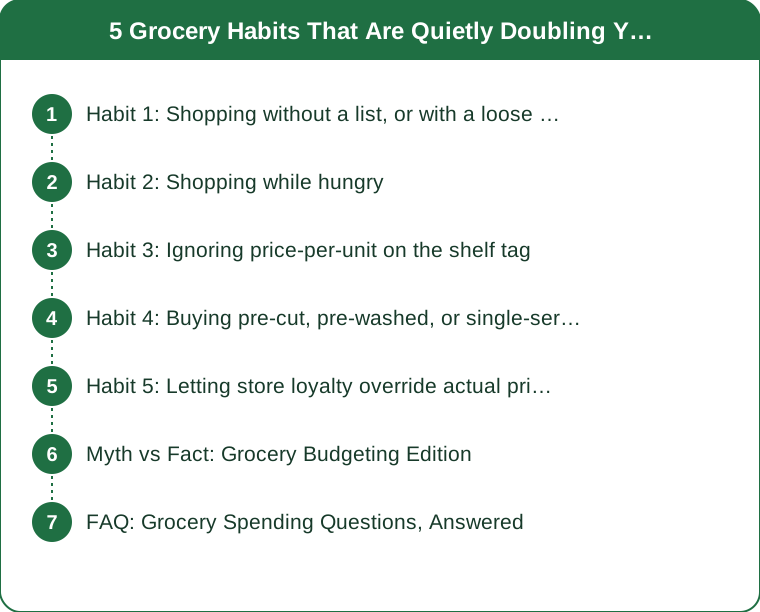
Habit 1: Shopping without a list, or with a loose one
Shoppers without a specific list report spending on average 23% more per trip than those working from an itemized one, largely from impulse adds picked up while browsing aisles you didn’t need to walk down. A list built from your actual planned meals — not a vague “stuff we need” note — closes most of that gap immediately.
The most effective version of this habit ties the list directly to a specific meal plan for the week, not just a running inventory of what’s low. A list that says “chicken thighs, broccoli, rice — Tuesday dinner” keeps you moving with purpose through the store; a list that just says “chicken, veggies, rice” still leaves room to wander and compare, which is exactly where the extra 23% tends to creep back in.
Habit 2: Shopping while hungry
Hunger measurably increases impulse purchases of high-calorie, non-essential items in controlled studies — your brain’s reward response to food cues gets amplified when you’re actually hungry, and that translates directly into cart additions you didn’t plan. A small snack 15 minutes before you shop is a genuinely effective, evidence-backed fix, not just folk advice.
This effect is strongest in the first 10-15 minutes of a trip, which is often exactly when shoppers pass through the bakery and snack aisles near the entrance — store layouts are frequently designed around this pattern. A protein-forward snack (a handful of nuts, a string cheese) blunts the hunger-driven impulse response more effectively than a sugary one, which can spike and then crash before you’ve even reached the checkout line.
Habit 3: Ignoring price-per-unit on the shelf tag
The bigger package isn’t always cheaper — bulk sizes are frequently priced higher per ounce than a mid-size option when a store is running a promotion on the smaller size. Checking the small price-per-unit number on the shelf tag, not the sticker price, is the only reliable way to catch this, and it can save 10-15% on staples like grains, oils, and cleaning supplies.
This habit matters most for exactly the items people assume are automatically cheaper in bulk — paper towels, laundry detergent, and cooking oil are the three categories where per-unit price traps show up most often, since promotional pricing on smaller sizes rotates weekly while the “value size” sticker stays the same regardless of the actual math underneath it.

Habit 4: Buying pre-cut, pre-washed, or single-serve versions
Pre-chopped vegetables, individually wrapped snacks, and single-serve yogurt cups routinely cost 30-60% more per equivalent ounce than their whole or bulk counterparts. The convenience is real, but paying that premium on every item in a cart — rather than reserving it for the one or two things you genuinely won’t prep otherwise — is where a lot of the invisible inflation hides.
A useful middle-ground habit: buy whole and spend 10 minutes on a Sunday portioning items into single-serve containers yourself. This captures most of the grab-and-go convenience without paying the per-ounce markup on every single item, and it works especially well for produce and snacks that are the biggest offenders in pre-packaged form.
Habit 5: Letting store loyalty override actual prices
Sticking to one store out of habit means missing weekly loss-leader deals — the deeply discounted items stores use to draw traffic — at competitors. Shoppers who rotate between 2 stores based on a quick look at each week’s flyer save meaningfully on staples over a year, even accounting for the extra trip, since loss-leader items are usually staples like eggs, chicken, and produce.
The practical version of this doesn’t require becoming a full-time deal-hunter — a 2-minute flyer check on your phone before you leave the house is enough to know which store has this week’s best price on the 3-4 items you buy most often. Anything beyond that starts costing more in time than it saves in money, so this is a habit worth keeping deliberately small.
Myth vs Fact: Grocery Budgeting Edition
Myth: Store brand groceries are lower quality than name brand. Fact: Store brands are frequently manufactured in the same facilities as name brands, especially for pantry staples, and blind taste tests routinely show little to no detectable difference for items like canned goods, flour, and dairy.
Myth: Buying in bulk always saves money. Fact: Bulk only saves money if the per-unit price is actually lower and you’ll use the item before it spoils or expires — bulk produce and dairy frequently end up wasted, erasing the savings entirely.
FAQ: Grocery Spending Questions, Answered
What’s the single fastest way to lower a grocery bill?
Building your list from your actual planned meals for the week, rather than shopping from memory or habit, typically produces the fastest and largest single improvement.
Is it worth shopping at multiple stores to save money?
Yes, for staples with big loss-leader swings (eggs, meat, produce) — but only if the second store is genuinely convenient, since gas and time costs can offset small savings on a store that’s far out of your way.
Do grocery delivery apps make bills higher or lower overall?
Higher, in most cases — delivery apps often mark up item prices beyond the in-store price on top of delivery and service fees, so they’re best reserved for occasional convenience rather than the weekly shop.
TL;DR:
- A specific list built from real planned meals cuts impulse spending significantly more than a vague one
- Never shop hungry — even a small snack 15 minutes before measurably reduces impulse buys
- Check price-per-unit, not sticker price — bigger isn’t always cheaper
- Reserve pre-cut and single-serve convenience items for the one or two things you truly won’t prep yourself
Pick the two habits above that sound most like you and fix just those this week — that’s usually enough to see the difference on your next receipt.
Keep Reading
This article is for general informational purposes only and is not medical advice. Always consult a qualified health professional for guidance specific to you.