7 Pantry Staples That Expire Way Faster Than You Think
Quick Answer: Ground spices, whole grain flour, nuts, cooking oils, baking powder, opened peanut butter, and brown rice all lose quality or go rancid noticeably faster than most people assume, often within 6-12 months rather than the multi-year shelf life people expect from ‘pantry staples.’
The pantry has a reputation as the slow-moving part of the kitchen — the place things sit safely for years. For a handful of common staples, that reputation is quietly wrong.

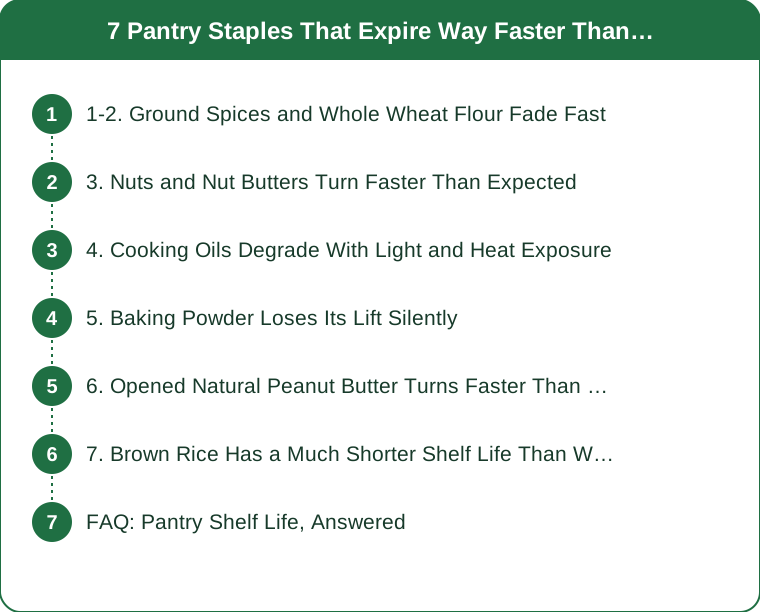
1-2. Ground Spices and Whole Wheat Flour Fade Fast
Ground spices don’t spoil in a dangerous way, but they lose most of their flavor strength within 6-12 months of opening, well before most people think to replace them. A quick test: rub a pinch between your fingers — if the smell is faint, it’s time to restock, regardless of the printed date.
The natural oils in the wheat germ that make whole wheat flour more nutritious also make it go rancid within 3-6 months at room temperature, unlike refined white flour which lasts closer to a year. Storing whole wheat flour in the freezer extends this significantly.
3. Nuts and Nut Butters Turn Faster Than Expected
Raw nuts, especially walnuts and pecans, have a high fat content that oxidizes within a few months at room temperature, developing a bitter or ‘off’ taste well before visible mold would ever appear. Refrigerating or freezing nuts roughly doubles their usable shelf life.
4. Cooking Oils Degrade With Light and Heat Exposure
Oils stored near a stove or in a sunny spot degrade months faster than the same oil kept in a cool, dark cabinet, since heat and light both accelerate oxidation. A rancid oil smells slightly like crayons or paint, not just ‘stale,’ and is worth tossing rather than cooking with.

5. Baking Powder Loses Its Lift Silently
Baking powder doesn’t smell or look different when it’s lost potency, it just stops working, leaving baked goods dense and flat with no obvious warning sign. The fix is a simple test: a teaspoon in hot water should fizz vigorously — if it barely reacts, it’s done.
6. Opened Natural Peanut Butter Turns Faster Than Processed
Natural peanut butter without stabilizers oxidizes and can turn rancid within a couple of months once opened and left at room temperature, unlike shelf-stable processed versions which last considerably longer. Refrigerating natural peanut butter after opening slows this down noticeably.
7. Brown Rice Has a Much Shorter Shelf Life Than White Rice
The bran layer left on brown rice contains oils that go rancid within 6 months at room temperature, while white rice can last years in the same conditions because that oily layer has been removed. Buying brown rice in smaller quantities, or freezing bulk portions, avoids the waste of a bag going stale before you finish it.
FAQ: Pantry Shelf Life, Answered
Does freezing actually extend shelf life for these items?
Yes, significantly for flour, nuts, and brown rice specifically — freezing slows the oxidation process that causes rancidity in fat-containing staples.
Is rancid food dangerous, or just lower quality?
Most rancid pantry items are unpleasant-tasting rather than dangerous, but the nutritional and flavor quality drops substantially, so it’s still worth replacing them.
What’s the easiest habit to catch these before they go bad?
Smelling and tasting a small amount before using it in a full recipe catches most rancidity issues before they ruin an entire dish.
TL;DR:
- Ground spices, whole wheat flour, nuts, and oils all degrade faster than shelf-stable reputation suggests
- Baking powder fails silently — test it in hot water rather than trusting the date
- Refrigerating or freezing fat-containing staples roughly doubles their usable life
- A quick smell test before cooking catches most rancidity before it wastes a meal
Check these seven the next time you’re in the pantry — you’ll likely find at least one that’s past its real prime.
Keep Reading
This article is for general informational purposes only and is not medical advice. Always consult a qualified health professional for guidance specific to you.