7 Foods People Consistently Overbuy That Just End Up Wasted
Quick Answer: Fresh herbs, bagged salad greens, specialty condiments, bread, berries, milk bought in bulk, and pre-cut vegetables are the seven most commonly overbought and wasted grocery items, usually because they’re bought with good intentions but don’t match how quickly they’re actually realistic to use.
Most food waste isn’t from obviously spoiled leftovers — it’s from a specific, predictable set of items that get bought optimistically and used far less than planned.
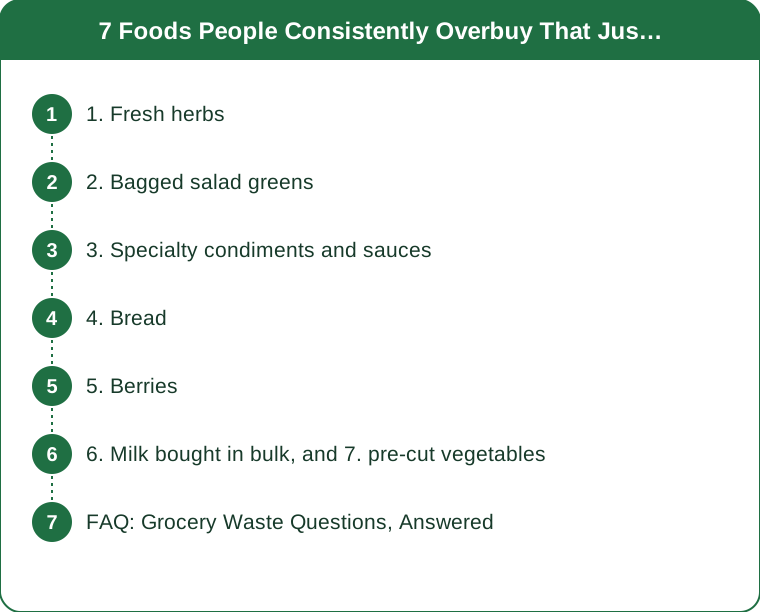
1. Fresh herbs
A recipe calls for 2 tablespoons of a fresh herb, and the only available option is a full bunch, leaving the rest to wilt in the fridge before it’s used again. Buying dried versions for recipes that only need a small amount, or freezing extra fresh herbs in oil in an ice cube tray, both solve this.
2. Bagged salad greens
Bagged greens have a shorter realistic shelf life than most people expect, especially once opened, and good intentions to eat salads all week frequently lose out to actual dinner plans changing. Buying smaller quantities more frequently reduces the amount wasted per bag.
3. Specialty condiments and sauces
A recipe calling for a specific, less common condiment often means buying a full bottle for one use, with the rest sitting unused for months. Checking if a more common substitute works, or specifically seeking out small-size or single-serving options, reduces this waste category significantly.

4. Bread
Bread bought with the intention of daily use often gets replaced by other convenient options mid-week, leaving the loaf to go stale before it’s finished. Freezing half a loaf immediately after purchase, rather than leaving it all in the pantry, extends realistic usable life significantly.
5. Berries
Berries spoil faster than almost any other common produce item, often within just a few days, and are frequently bought in a larger container than realistically gets eaten in that window. Buying smaller quantities more frequently, or freezing extras immediately, both reduce this specific waste pattern.
6. Milk bought in bulk, and 7. pre-cut vegetables
6. Milk bought in bulk for a savings discount — a larger bulk-size milk purchase for a per-unit savings can easily go to waste if consumption doesn’t match the larger volume, especially for households that don’t use milk daily in large quantities. Calculating actual weekly usage before buying the bulk size avoids this common false-economy trap.
7. Pre-cut vegetables — convenient but spoil measurably faster than whole vegetables due to the increased surface area exposed to air, meaning the convenience premium often comes with a higher realistic waste rate unless used within just a couple of days of purchase.
FAQ: Grocery Waste Questions, Answered
Is buying in bulk always a bad idea for saving money?
Not always — bulk buying works well for genuinely shelf-stable items (grains, canned goods) where spoilage isn’t a realistic risk; the waste risk specifically applies to perishable items bought in bulk.
Does freezing actually preserve these items well, or does quality suffer significantly?
For herbs, bread, and berries specifically, freezing preserves usability well for cooking purposes, even if fresh-eating texture changes slightly — this is a genuinely effective waste-prevention method for these specific items.
What’s the single easiest habit to reduce grocery waste from this list?
Buying smaller quantities of the fastest-spoiling items (berries, bagged greens, pre-cut vegetables) more frequently, rather than one larger weekly haul, addresses the biggest waste sources on this list with minimal extra effort.
TL;DR:
- Fresh herbs, bread, and berries spoil faster than most buying habits account for
- Bagged greens and pre-cut vegetables have a shorter realistic window than expected
- Bulk savings on perishables like milk only pay off if usage actually matches the volume
- Buying smaller amounts of fast-spoiling items more often reduces waste significantly
These seven items aren’t randomly wasted — they’re bought with good intentions that don’t match realistic use timelines.
Keep Reading
This article is for general informational purposes only and is not medical advice. Always consult a qualified health professional for guidance specific to you.