7 Freezer Habits That Quietly Cut a Grocery Bill
Quick Answer: Freeze in portions you will actually use, label everything with contents and date, keep a running list on the door, freeze flat for fast thawing, and buy reduced items specifically to freeze. Most freezer savings come from stopping waste rather than from bulk buying - and household food waste runs to a meaningful share of what people spend on groceries.
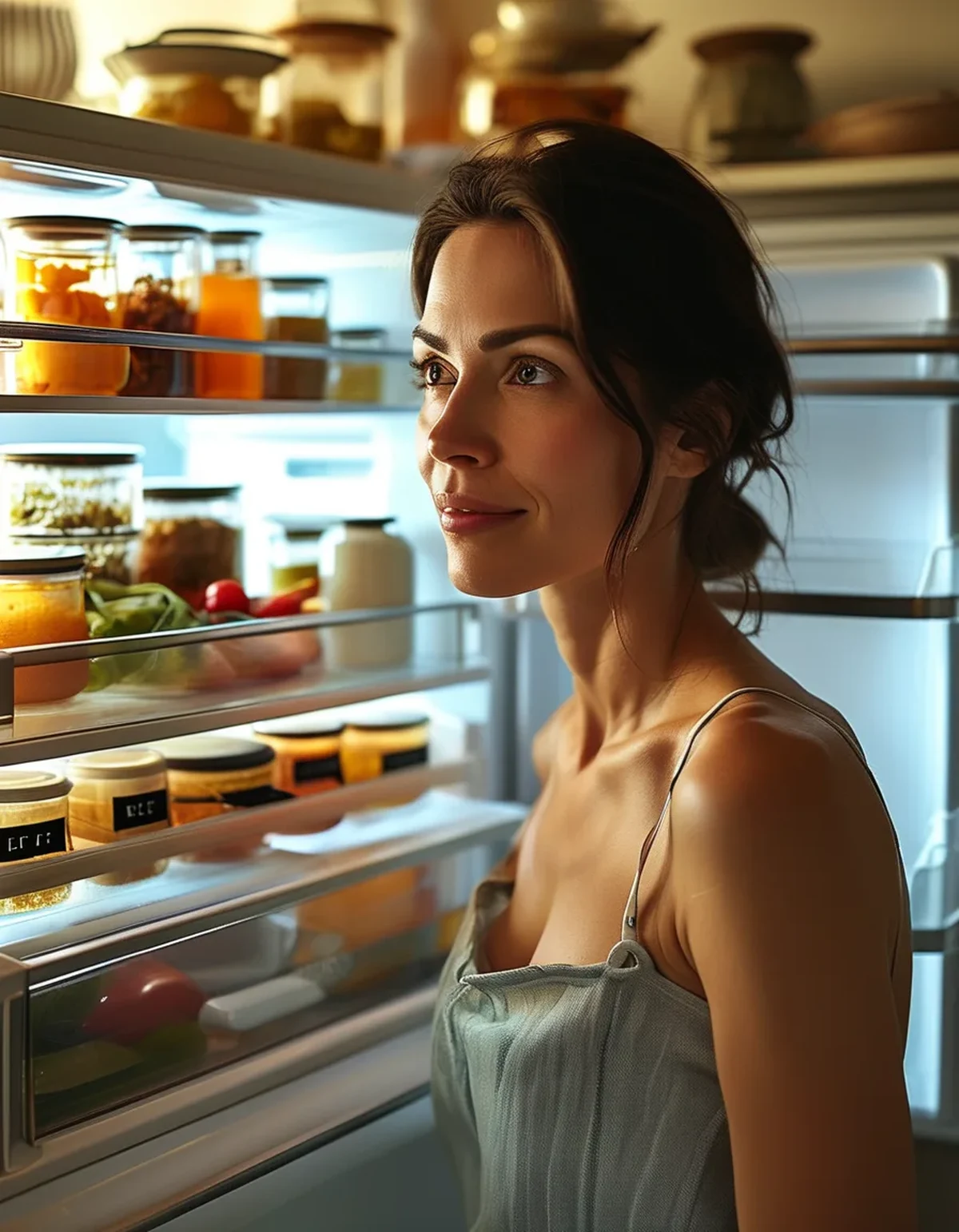
Every freezer contains at least one unidentifiable tub. That tub represents money spent, food wasted, and the exact reason most people do not trust their freezer to save them anything. The difference between a freezer that saves you money and one that stores your regrets comes down to about seven habits, none of which take more than a minute.
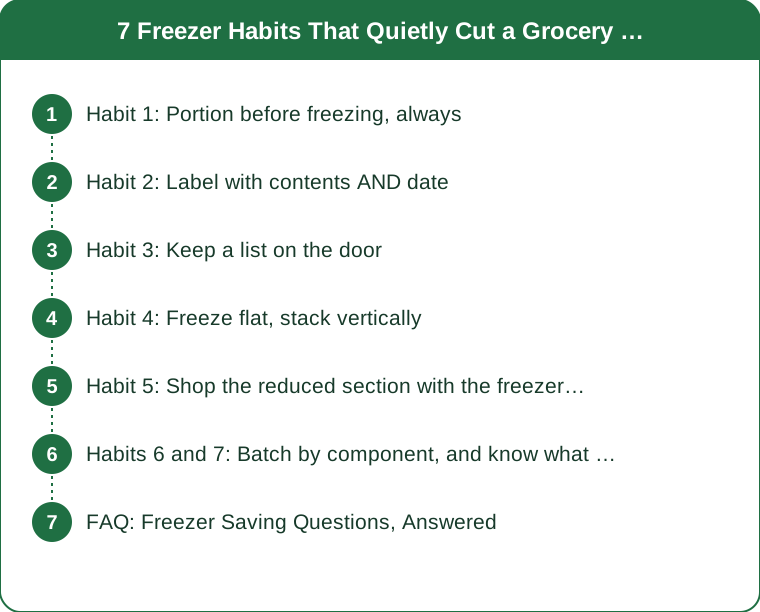
Habit 1: Portion before freezing, always
The single most common freezer failure is freezing things in the size they arrived rather than the size you will use.
A whole batch of bolognese in one container means thawing the entire thing to eat one portion. A block of mince frozen as bought means defrosting 500g to use 200g. In both cases you end up either eating more than you wanted, refreezing thawed food, or throwing away the remainder.
Portion at the point of freezing, not the point of eating. It costs two extra minutes and it is what makes everything else work.
Practical sizes:
- Cooked meals: single or double portions, whichever matches your household
- Mince and meat: 200 to 250g flat packets
- Stock and sauces: ice cube trays, then bagged - perfect for a single recipe’s worth
- Herbs: chopped into ice cube trays with a little oil or water
- Bread: sliced before freezing, so you take out what you need
The portioned freezer is the one you actually reach into on a Tuesday night. The unportioned one is the one you look at and then order takeaway.
Habit 2: Label with contents AND date
This sounds trivial and it is the difference between a freezer you use and a freezer you avoid.
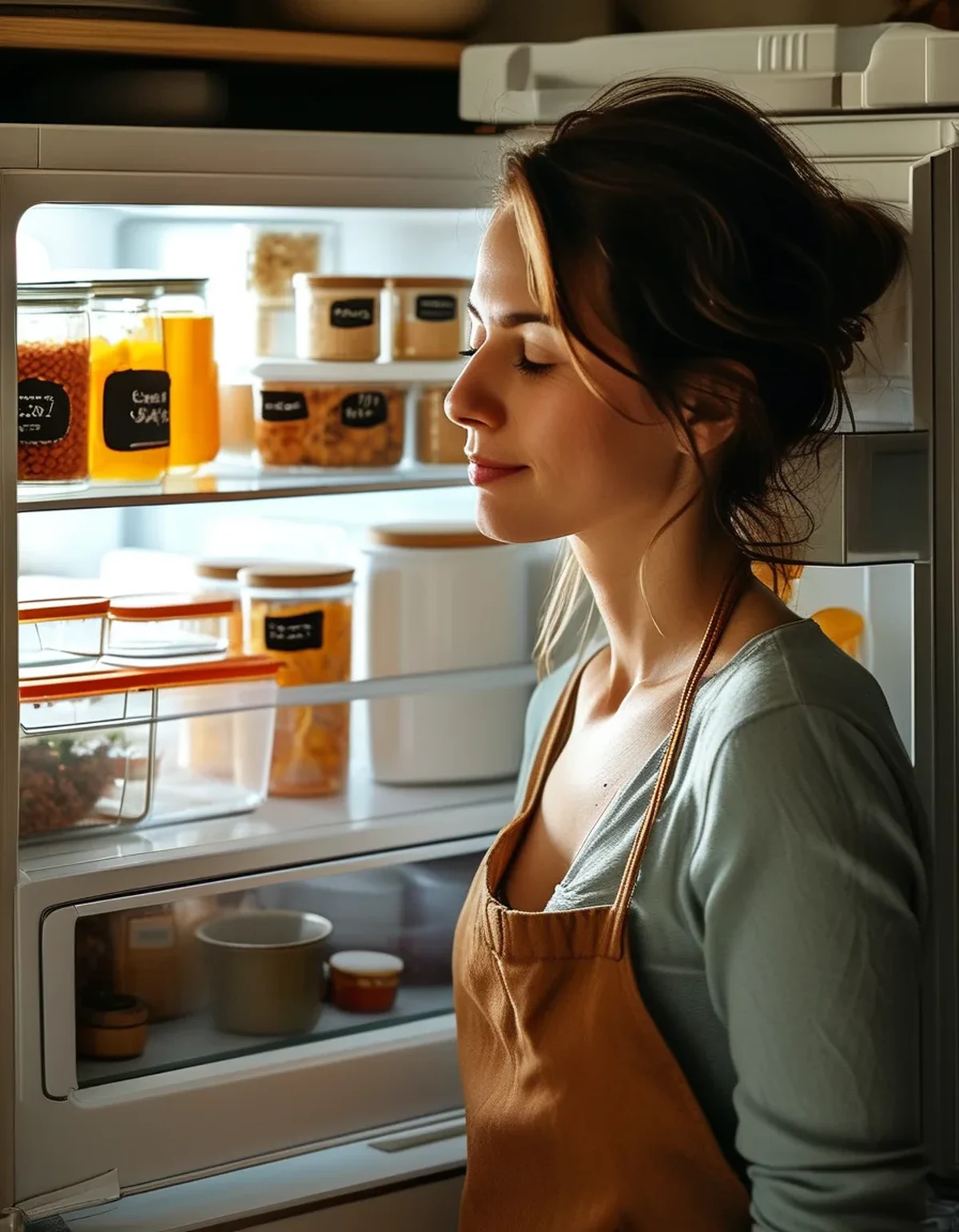
A container of orange sauce could be tomato, sweet potato soup, or curry. Uncertainty is what causes food to sit until it is unquestionably too old. You throw away what you cannot identify, and identification is a five-second problem solved with masking tape and a marker.
Write three things: what it is, the date, and the portion count. Chilli, 3 Oct, 2 portions.
On dates - freezing halts bacterial growth, so frozen food stays safe indefinitely at a proper freezer temperature. What declines is quality: texture, moisture, and flavour. Rough quality windows:
- Cooked meals and soups: 3 months
- Raw mince: 3 to 4 months
- Raw whole cuts: 6 to 12 months
- Bread: 3 months
- Vegetables, blanched or bought frozen: 8 to 12 months
- Butter and hard cheese: 6 months
Past those windows food is generally still safe and increasingly disappointing, which is its own kind of waste.
Habit 3: Keep a list on the door
The freezer is the only storage in the house where you cannot see what you own without letting the cold out.
A sheet of paper and a pen taped to the door, or a note on your phone, listing what went in and crossing off what came out. It takes five seconds per item and it fixes three problems at once:
- You stop buying things you already have. The second bag of frozen peas is a small, extremely common waste.
- You start planning around it. A visible list turns the freezer into an ingredient source rather than an archive.
- Old things get used. The chilli from six weeks ago gets eaten because you can see it exists.
Then build one meal a week around the list. A freezer night - where the rule is that dinner comes from what is already frozen - is the mechanism that keeps stock rotating. Without it, the freezer only fills.
This one habit alone tends to change how much a freezer is worth to a household, because it converts stored food into planned food.
Habit 4: Freeze flat, stack vertically
A freezer full of round tubs wastes an enormous amount of space and thaws slowly.
Freeze liquids and soft foods flat in bags, laid on a tray until solid. A flat frozen slab thaws in a fraction of the time of a block, because the surface area to volume ratio is far better - a flat bag of soup can be usable in under an hour, where a tub takes most of a day.
Then file them vertically, like books, in a drawer or a box. You can see every label at once, and you stop excavating.
Use containers that stack. Square and rectangular beat round for exactly the same reason bookshelves are not circular.
Remove air. Air causes freezer burn - the dry, greyish patches where moisture has sublimated from the surface. Press the air out of bags before sealing, or use the water displacement trick: seal all but a corner, lower the bag into water so pressure pushes the air out, then seal fully.
And keep a small box for odds and ends - half an onion, the end of a tube of tomato puree, leftover coconut milk. Those small quantities are exactly what gets thrown away otherwise, and they are what a mid-week meal is built from.
Habit 5: Shop the reduced section with the freezer in mind
This is where the freezer genuinely lowers a bill rather than just preventing waste.
Reduced items are marked down because they are near their use-by date, which matters only if you intend to eat them within days. Freeze it and the discount is free money.
Worth buying reduced to freeze:
- Meat and fish - the biggest markdowns and the biggest savings
- Bread and bakery - freezes almost perfectly and toasts straight from frozen
- Milk - freezes fine, shake well after thawing
- Hard cheese - texture changes slightly, so use it for cooking
- Butter - freezes for months with no change
Not worth it: most whole salad vegetables, eggs in shell, soft cheeses, and anything with a high water content you plan to eat raw.
One rule that keeps this honest: only buy reduced items you already had a use for. A markdown on something you do not eat is not a saving, it is a cheaper version of waste. And freeze it the day you buy it, not after three days of intending to.
Most supermarkets do their main reductions at a predictable time of day - learning that time for your local shop is worth more than any voucher.
Habits 6 and 7: Batch by component, and know what does not freeze
Habit 6: Freeze components, not just finished meals
Finished meals are convenient and inflexible - a frozen lasagne is only ever a lasagne. Components are more useful per unit of freezer space.
Worth freezing as components:
- Cooked rice and grains, in portions, straight from cool. Reheat thoroughly and only once.
- Caramelised onions, in cubes. Half an hour of work that upgrades ten future meals.
- Cooked beans and lentils from dried, which is dramatically cheaper than tinned and freezes perfectly.
- Sofrito or a base of onion, carrot, and celery, frozen flat.
- Grated cheese, which does not clump if frozen loose on a tray first.
- Bananas for baking and smoothies, peeled and chopped.
One batch of components turns into a dozen different meals, where one batch of finished chilli turns into chilli.
Habit 7: Know the things that genuinely do not work
Saving money on things that emerge inedible is not saving money.
Do not freeze: whole eggs in shell, single or double cream (it splits, though whipped cream freezes fine), plain yoghurt, mayonnaise and mayo-based sauces, soft lettuce and cucumber, whole potatoes (they go grainy - cooked and mashed is fine), and fried food, which reheats soggy.
Freezes better than expected: cheese sauce, cooked pasta bakes, most cakes and pastry, wine in cubes for cooking, and citrus zest and juice.
Follow food safety guidance: cool food before freezing, thaw in the fridge rather than at room temperature, reheat until piping hot throughout, and do not refreeze food that has been thawed unless you cook it first.
FAQ: Freezer Saving Questions, Answered
How long can you keep cooked food in the freezer?
It stays safe indefinitely at a proper freezer temperature, but quality declines. About 3 months is a good working limit for cooked meals and soups before texture and flavour noticeably suffer.
Does freezing food really save money?
Yes, mostly by preventing waste rather than through bulk buying. Household food waste is a substantial share of grocery spending, and a well-organised freezer is the most effective single tool against it.
Can you refreeze thawed food?
Not raw food that has been thawed - but you can cook thawed raw food and freeze the cooked dish. Thaw in the fridge rather than on the counter.
TL;DR:
- Portion before freezing and label with contents, date, and portion count - unidentified food gets thrown away.
- Keep a list on the door and run one freezer night a week to keep stock rotating.
- Freeze flat, file vertically, and squeeze the air out to prevent freezer burn.
- Buy reduced meat, bread, milk, and butter specifically to freeze - that is where real savings come from.
- Freeze components, not just finished meals, and skip the things that genuinely do not survive it.
The freezer does not save money by being full. It saves money by being organised enough that you actually eat what is in it, and every habit here exists for that one reason.
Keep Reading
This article is for general informational purposes only and is not medical advice. Always consult a qualified health professional for guidance specific to you.