7 Grocery Budget Mistakes That Are Quietly Costing You More Every Month
Quick Answer: Shopping without a list, going in hungry, buying pre-cut produce, ignoring unit price, over-buying perishables, skipping the pantry check, and grocery shopping too frequently are the 7 most common budget leaks, together often adding up to 20-30% of an unmanaged grocery bill.
Most grocery overspending doesn’t come from one big purchase — it comes from 7 small habits repeated every single trip.

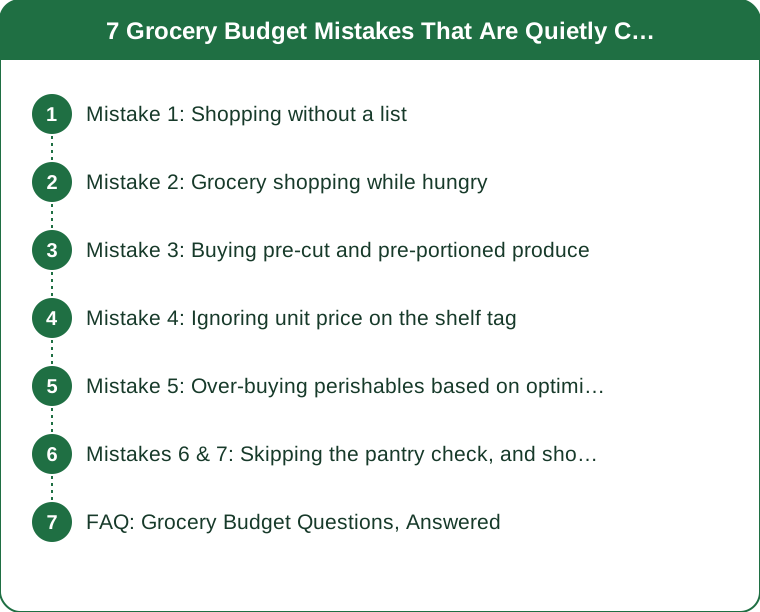
Mistake 1: Shopping without a list
Unplanned trips lead to impulse buys that average significantly more per trip than list-based shopping, since store layout is specifically designed to prompt add-on purchases when you’re browsing without a fixed plan.
Mistake 2: Grocery shopping while hungry
Shopping hungry measurably increases both the volume and the impulse-purchase rate of what ends up in the cart, a well-documented effect — eating something small before shopping is a simple, free fix.
Mistake 3: Buying pre-cut and pre-portioned produce
Pre-cut fruit and vegetables often cost 2-3x more per pound than whole versions for the convenience of skipped prep time — buying whole and cutting at home is one of the highest-impact savings for produce-heavy grocery lists.

Mistake 4: Ignoring unit price on the shelf tag
The sticker price doesn’t account for package size, and a larger package isn’t always cheaper per ounce — checking the small unit price number on the shelf tag (not the item price) reveals the actual better deal, which isn’t always obvious at a glance.
Mistake 5: Over-buying perishables based on optimistic meal planning
Buying a week’s worth of fresh produce for meals that don’t actually get cooked leads to food waste that functions as pure wasted grocery spending — buying perishables for 2-3 days at a time and refilling mid-week reduces this significantly.
Mistakes 6 & 7: Skipping the pantry check, and shopping too often
Mistake 6: Skipping the pantry and fridge check before shopping
Buying duplicates of items already at home is one of the most common and avoidable overspends — a 2-minute check before leaving the house consistently prevents this.
Mistake 7: Shopping too frequently
More trips mean more exposure to impulse buys and sales displays — consolidating to one larger weekly trip instead of several smaller ones reduces total spending for most households, even accounting for the need to plan further ahead.
FAQ: Grocery Budget Questions, Answered
Which of these 7 mistakes has the biggest single impact?
Shopping without a list combined with shopping hungry together tend to account for the largest share of unplanned spending.
Does meal planning actually save meaningful money?
Yes — households that meal plan before shopping consistently report lower grocery bills and less food waste than those who shop reactively.
Is buying in bulk always a genuine savings?
Only if the item will actually get used before spoiling or expiring — bulk perishables that go to waste erase the per-unit savings entirely.
TL;DR:
- List-based, non-hungry shopping is the single biggest lever for reducing impulse spending
- Whole produce beats pre-cut on price by a wide margin
- Unit price, not sticker price, reveals the actual better deal
- Buying perishables for a few days at a time cuts food waste significantly
- Fewer, larger trips beat frequent small ones for most households
None of these fixes require a stricter budget — they just close the small leaks that were quietly adding up every single trip.
Keep Reading
This article is for general informational purposes only and is not medical advice. Always consult a qualified health professional for guidance specific to you.