7 Grocery Pricing Tricks Stores Use That Quietly Inflate Your Bill
Quick Answer: Eye-level shelf placement, ‘sale’ pricing that isn’t actually discounted, and unit price obscuring through inconsistent package sizes are three of the most common grocery pricing tricks — all designed to make comparison shopping harder than it needs to be.
Grocery stores are laid out and priced with deliberate psychological and comparison-shopping friction built in. Recognizing these seven tricks is the fastest way to shop the same store for meaningfully less money.
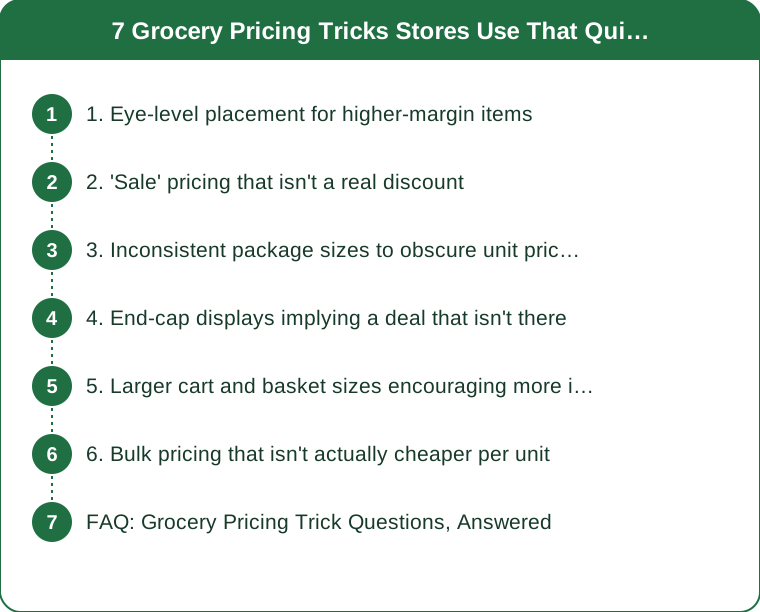
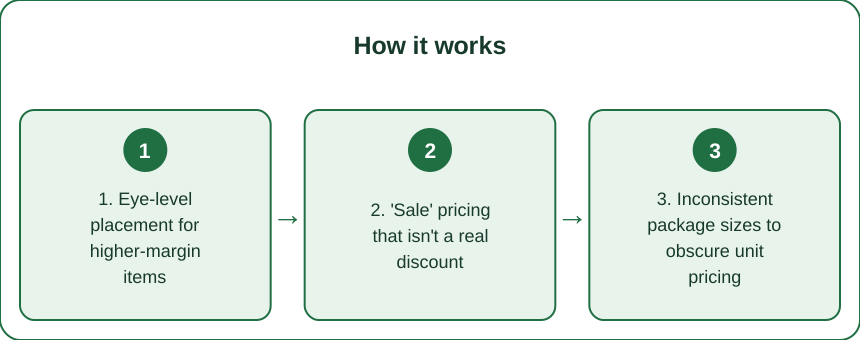
1. Eye-level placement for higher-margin items
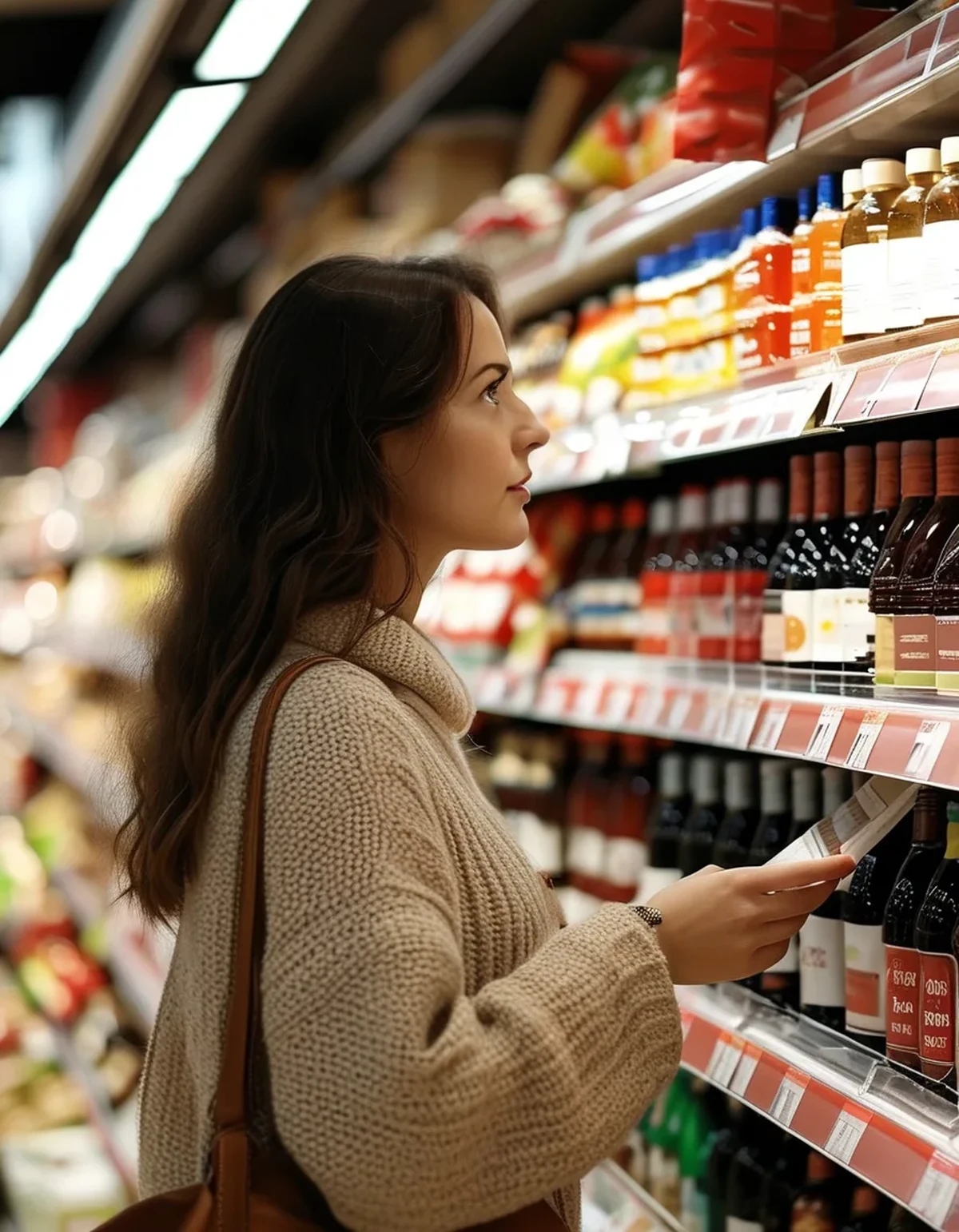
Products at eye level are typically the most profitable for the store, not necessarily the best value — cheaper, comparable options are frequently placed on lower or higher shelves specifically because fewer shoppers look there.
2. ‘Sale’ pricing that isn’t a real discount
Some sale tags reflect a price that was only briefly raised beforehand, making the ‘discount’ technically accurate but not a genuine price reduction from the norm. Checking a price-tracking app or your own memory of typical pricing catches this more reliably than trusting the tag.
3. Inconsistent package sizes to obscure unit pricing
When package sizes vary slightly between brands (14.5 oz vs 15 oz, for example), quick total-price comparison becomes misleading — checking the unit price (cost per ounce, listed on most shelf tags) is the only reliable comparison method.
4. End-cap displays implying a deal that isn’t there
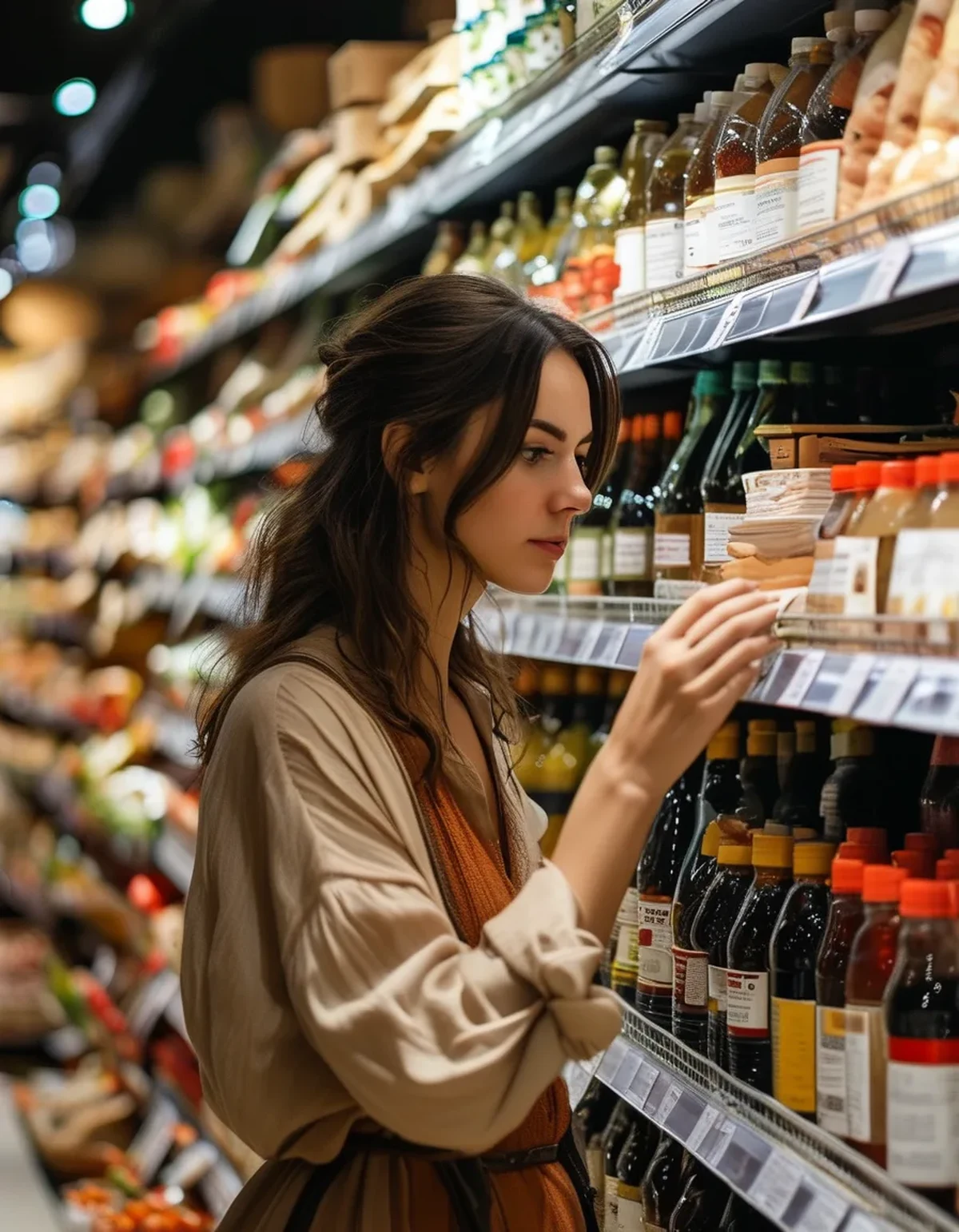
Items placed on high-visibility end-cap displays are frequently regular-priced, not discounted, despite the prominent placement implying a promotion — checking the actual shelf tag price rather than assuming the display means a deal is essential.
5. Larger cart and basket sizes encouraging more impulse fills
Store research has shown that larger cart sizes correlate with increased spending, since a partially empty large cart can subconsciously prompt more items to ‘fill the space’ compared to a smaller cart or basket.
6. Bulk pricing that isn’t actually cheaper per unit
Larger ‘bulk’ package sizes are marketed as better value but occasionally have a higher per-unit cost than the standard size, especially during a promotional period on the smaller size — unit price comparison catches this every time total price comparison would miss it.
- Placing high-margin impulse items at checkout Checkout lane placement is specifically designed for last-moment impulse additions when guard is down after the main shopping decisions are already made — a quick mental check before adding anything from this zone helps avoid unplanned spending.
FAQ: Grocery Pricing Trick Questions, Answered
Is unit price always listed clearly on shelf tags?
Most stores are required to display it, though the font is often small and placed inconsistently — checking specifically for it, rather than assuming it’s absent, usually reveals it.
Do these tricks work the same way in every store?
Most major grocery chains use some version of these tactics, though the specifics vary by store layout and regional pricing strategy.
Does using a shopping list actually help counter these tactics?
Yes significantly — a list reduces exposure to impulse-designed placements like end-caps and checkout zones by keeping shopping focused on planned items.
TL;DR:
- Eye-level placement and end-cap displays often highlight higher-margin items, not better deals
- ‘Sale’ tags don’t always reflect a genuine price reduction — check unit price to compare reliably
- Larger bulk packaging isn’t automatically cheaper per unit than standard sizes
- A shopping list is one of the simplest ways to reduce exposure to impulse-designed placements
Next trip, check unit price on three items you’d normally grab without comparing — it’s often the fastest way to spot which pricing tricks are actually costing you.
Keep Reading
This article is for general informational purposes only and is not medical advice. Always consult a qualified health professional for guidance specific to you.